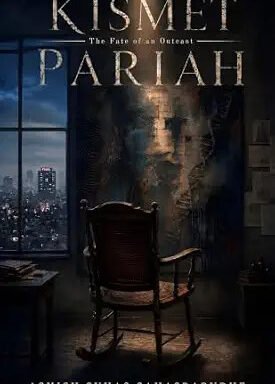
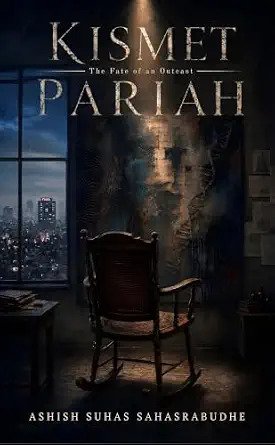
Kismet Pariah by Ashish Suhas Sahasrabudhe – A Review
A mysterious death, a seemingly manipulated setting, high-value paintings analysed by a highly experienced art valuer for an unusual form and pattern, two policemen going in different directions to solve the mystery of the dead man, and a ‘free hand’ given to the chief investigating officer (CIO) despite the alleged involvement of the rich and the famous in the murder-suicide episode.
These are the primary elements of this thriller set during the period of lockdown (adding a silent eeriness to the environment), which spans 31 hours as the author navigates the dense road of discovery and tries to reach a convincing closure, even as the CIO and his team chase answers to questions that keep popping up. The twists and turns keep you engaged, with nary a dull moment. The characters evolve beautifully as you turn the pages.
Even though it’s a thriller, the path of discovery is sprinkled with warm nuggets of wisdom and philosophy, making us question humanity’s cruelty against perceived abnormalities and the search for a spot of dignity in the mess of misplaced prejudices, all handled with deep sensitivity by the author.
Right from the start, the author’s clever writing stands out. In fact, these two sentences in the Prologue brought a huge smile to my face:
The screen woke with a soft vibration-that small, ugly intimacy of a device that knows a man better than his own mother ever did.
It was the kind of clue that arrives already wearing the answer’s clothes.
Somewhere toward the end, the elusive protagonist says, “I, the outcast, had finally found my fate.” A wonderful connection to the book title.
Such lovely grammatical inventiveness is scattered throughout Kismet Pariah using clever analogies, personification, similes, and metaphors.
While it’s great in some ways, I thought the repetition (even when it added little or no value to the story’s movement) came in the way of a seamless reading experience. Every character and scene felt intense (even simple glances had excessive detail), as if the writing was meant to ‘display clever writing skills’ rather than tell a good story.
‘The author navigates’ in my second paragraph of this review instead of ‘the investigation officer navigates’ reflects my thought on this aspect of the book. The author seems to take control of the readers’ minds, forcing us to notice every little detail (as if he doesn’t trust readers’ ability to understand the scene), and keeps the characters and the story’s progress from emerging naturally.
On a second read of Kismet Pariah, I realised this might be what a screenplay looks like, where every scene, thought, character expression, and their response needs to be explicitly explained so the scenes can be set as expected and actors can understand how to emote. For a novel, it hindered my reading pleasure.
That’s why I give this Kismet Pariah 3 stars instead of 4, despite beautifully warm characters and a nice, even if predictable, storyline.
Author’s Note:
I received this book to read and review from Blogchatter.
You can read book reviews here.