
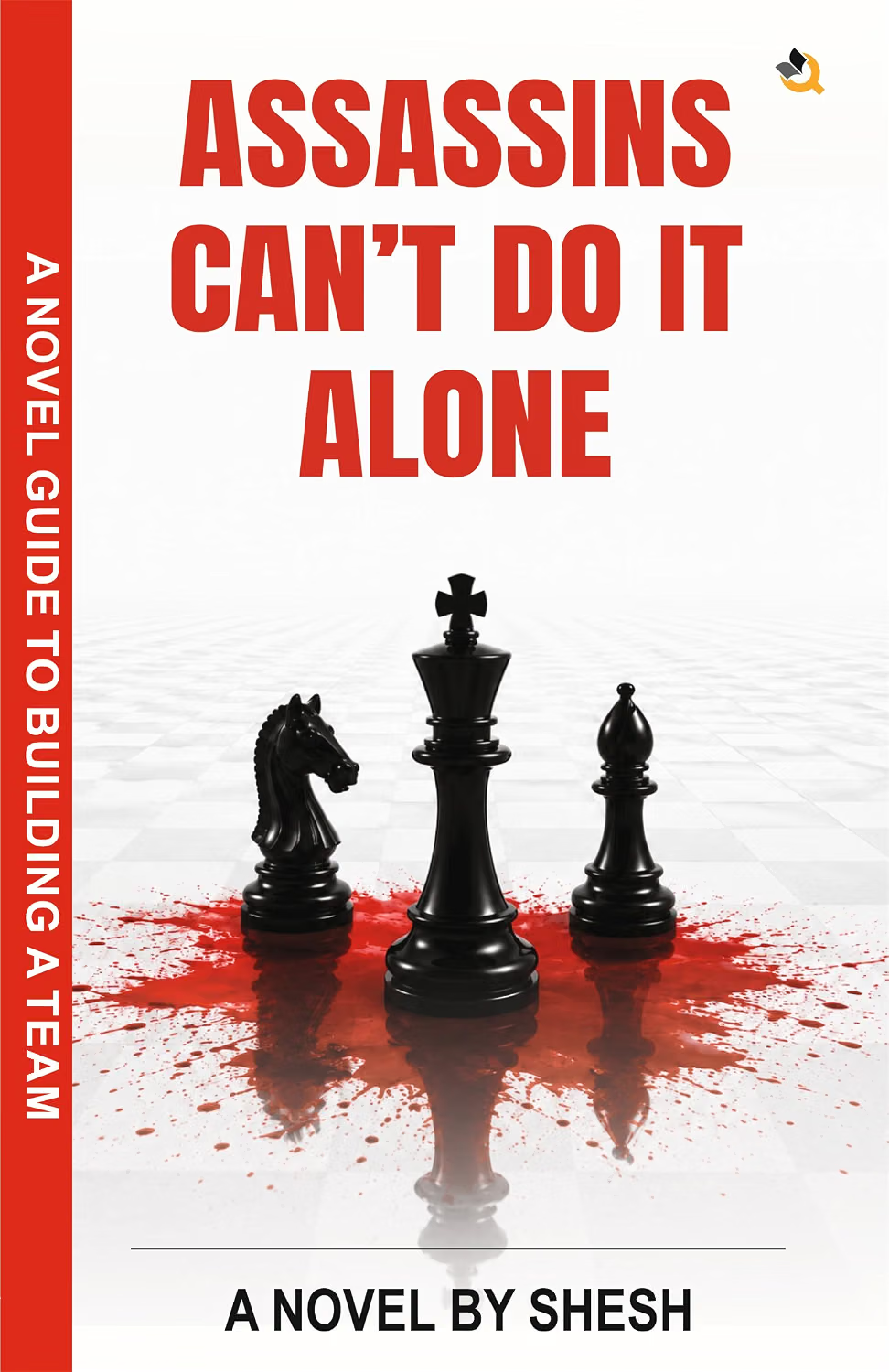
“Assassins Can’t Do It Alone” by Venkataraman Sheshashayee reminds me of the Queen of Crime, Agatha Christie’s quote: “Everyone is a potential murderer—in everyone there arises from time to time the wish to kill—though not the will to kill.”
The reason to kill could vary, ranging from the selfishness of psychopathic need to the seeming selflessness of vigilanteism or something/anything in between. The protagonist in this book has the reason to ‘bring to justice’ those who have the power to slip through the cracks of the legal system.
I find it perfectly probable that we all have a desire to kill some of the people we come in contact with. What nearly all of us lack, thankfully, is the will and wherewithal to take action.
Ishmael Dollah, a retired CEO who has seen a lot of success in his previous job, has the will and wherewithal for it. He becomes an assassin. He does the new job rather well, choosing the right targets (yes, those who slipped through the cracks thanks to their money, power, and influence), planning meticulously, and executing his plan to the best of his ability.
I liked how he starts by assessing risks, like a CEO would, before finding the means, method, opportunity, and right resources to get the job done. In this case, he ropes in a private investigator and a police inspector. I liked how he brings them into his perspective on how justice ought to be rendered when the system has missed it, psychologically manipulating them. His method is delightfully Machiavellian.
The writing is gripping (when it needs to be) and witty (for the right kind of relief), and the two blend seamlessly. The protagonist’s biggest concern is that of being discovered. He wants to kill all the right people but also wants the “normal life” he has with his loving family, without them knowing about his other life. He is, after all, a common man who wants to deliver justice. His desire to keep his common image public and his murderous image anonymous is endearing.
He does get away most of the time, but not all of the time. When he does get caught, he uses his glib creativity to convince some loved ones, but not all. I hope this unfinished convincing finds its conclusion in the next book, one I’m already looking forward to reading.
I want any book on vigilantes to answer two questions. How does the killer convince the reader that they are as grey as ever, yet deeply want to correct some of the wrongs in this cruel world? Why do they have this desire in the first place?
While the first question is answered sufficiently well, the second question remains unsatisfactorily answered for me. What triggered the protagonist’s desire to seek justice? For me, this reason (and it ought to be uncompromisingly compelling) matters most because it helps me connect with the protagonist. Without it, I felt disconnected from Ishmael, even if the writing is excellent.
Despite that missing connection, I enjoyed the book and highly recommend it to readers like me who seek thrills in an armchair.
Author’s Note:
This is an Advance Readers’ Copy review. This post is a part of Blogchatter Half Marathon 2.0.
If you liked this review, you might like to some of my other book reviews too: